

Learn Practical AI Skills for Marketing with Will Francis
Discover practical AI skills for marketing with AI educator Will Francis and Avenue9 founder Mike Montague. Learn how to use Claude, ChatGPT, and AI agents to automate repetitive work, build custom tools, improve marketing productivity, and strengthen customer relationships while keeping your marketing human-first.
How to use AI agents, custom tools, and automation to give your marketing team new superpowers.
I’ve been following Will Francis for a while because he’s one of the few AI educators who consistently shares practical advice without getting carried away by the hype. He has built an audience of over 400,000 followers across social media, teaches digital marketing, and has been through enough technology revolutions to recognize when we’re getting a little carried away with the latest shiny object.
I invited Will onto the Human-First AI Marketing® Podcast to talk about the AI skills marketers should actually be learning. We ended up discussing everything from building custom AI apps and agents to the future of education, the value of human relationships, and what his time working at MySpace can teach us about the AI race.
Here are five of my favorite takeaways for business owners and marketing leaders trying to make sense of all this.
1. Give Yourself New Superpowers with AI
Will shared a great way to evaluate AI opportunities. Look for things you’ve always wanted to accomplish but never had the time, money, or technical skills to do.
For example, Will has been building custom apps for his business, something he couldn’t have done before without hiring a developer. I’ve been doing the same thing at Avenue9, including building interactive proposals and a website trust assessment tool.
Think about your own marketing wish list. Maybe you’ve wanted to analyze hundreds of customer conversations, create personalized sales presentations, or build an interactive tool that helps prospects understand your services.
AI can now help you accomplish projects that would have been impractical for a small marketing team just a couple of years ago.
I’ve written about how I save 15–25 hours a week with ChatGPT, but I’m increasingly interested in what I can accomplish with those extra hours and capabilities.
Will’s advice was to look for opportunities to do something genuinely useful that was previously out of reach. That’s a great starting point for any SMB exploring AI.
2. Build an AI Command Center for Your Business
One of Will’s coolest examples was his AI-powered command center. He connected Claude to his social media metrics, website analytics, emails, calendar, meeting notes, and task lists to create a single view of his business.
Twice a day, his AI assistant reviews the information and helps him figure out what deserves attention.
It even noticed that he’d promised to send someone something during a previous meeting, checked his email, and reminded him that he hadn’t followed through. It also prepared notes for our podcast interview because it could see the appointment coming up.
That’s a pretty impressive assistant for someone trying to manage a business, create content, and maintain an audience across multiple platforms.
Most small businesses already have plenty of data scattered across their CRM, marketing tools, website, and email. Getting those systems to work together creates opportunities for AI to identify trends, surface problems, and recommend actions.
The trick is giving AI access to the right information and clear responsibilities. Start with one or two systems and build from there.
3. Let AI Agents Handle the Annoying Marketing Work
Will and I are both excited about the latest computer-use capabilities in tools like Claude and ChatGPT. AI agents can increasingly navigate websites, interact with software, conduct research, and perform repetitive tasks.
I shared an example from Avenue9 where I needed to update a new call to action across my social media profiles, website, podcast descriptions, and various business listings.
If you’ve ever had to update the same information in 20 different places, you know how much fun that is. Right up there with renewing your driver’s license.
I used Claude Cowork to navigate the different websites and help make the changes while I supervised the process. Will uses similar tools for researching podcasts, tracking competitors, identifying trends, and assisting with his video production workflow.
These are great examples of where AI automation can give your marketing team some breathing room.
The key is deciding which tasks deserve your personal attention and which ones can be delegated safely. My Human+AI Capability Map™ helps business leaders make those decisions by matching the work to the strengths of humans and AI.
Your team can spend more time doing the work that requires judgment, creativity, and expertise while AI takes care of the repetitive digital chores.
4. Keep Your Audience Relationships Human
This might have been my favorite part of the conversation.
Will has hundreds of thousands of followers, yet he still personally responds to comments and messages. He uses AI to research trends, analyze performance, and manage the work behind the scenes, while making sure his audience gets to interact with the real Will.
He made an interesting point about audience size. Someone with 10,000 highly engaged followers can generate more business than someone with a million followers if their audience trusts them more.
That’s especially important for B2B marketers. Most manufacturers, wholesalers, and professional services firms need a relatively small number of the right customers to grow. Millions of impressions mean very little when nobody trusts you enough to buy.
I talk about this in my article on Degenerative AI and Scalable Storytelling. Your most valuable marketing content often comes from real conversations with customers, employees, and industry experts.
AI can help capture, organize, and amplify those conversations so more people benefit from them.
Will’s philosophy fits perfectly with Human-First AI Marketing®. Use technology to support the relationships your business depends on, and make it easier for your people to show up when it matters.
5. Human Expertise Is Becoming a Premium Experience
Will teaches AI and digital marketing courses, so I asked him how education changes when people can get almost any answer from ChatGPT.
He reminded me that information has been available for free on the internet for decades. People still hire teachers, coaches, consultants, and personal trainers because they value personalized guidance, accountability, and someone who understands their situation.
I think this lesson applies to nearly every professional services business.
Your customers can use AI to research their problems, generate recommendations, and create plans. They’ll still appreciate experienced professionals who help them identify blind spots, make decisions, and follow through.
We also discussed the growing pressure on marketers to accomplish twice as much because they have AI tools. That expectation can be frustrating because AI only accelerates certain parts of the job.
For example, AI helps me turn a podcast interview into blogs, social posts, clips, and other marketing assets in a fraction of the time it used to take. The conversation itself still requires two humans spending time together and sharing their experiences.
That’s where we create the original insights that make all the supporting content worth consuming.
The opportunity for business owners is to use AI to expand their team’s capabilities while investing in the expertise and personal relationships that customers value.
What AI Skills Should You Learn Next?
Will and I agree that AI is going to become a normal part of how we work. The specific tools will keep changing, and Will’s experience at MySpace reminds us that the easiest technology to use often ends up winning.
For now, I’d encourage you to focus on three practical skills: learning to delegate repetitive work to AI agents, connecting your business information so AI can help you make smarter decisions, and developing the judgment to recognize when human attention creates the most value.
You can follow Will on LinkedIn for his latest AI tutorials and visit WillFrancis.com to learn more about his courses and community.
And if you’re wondering how well your business is building trust with customers and AI, I’ve got a practical tool you can try right now.
Get Your Free Human+AI Trust Score
I built the Human+AI Trust Score to help businesses understand how trustworthy their brand appears to both human buyers and AI recommendation engines.
Enter your website and we’ll evaluate 28 trust signals across five categories, including human trust, AI trust, reputation, technical security, and generosity. You’ll receive a score out of 100, along with three recommended actions to strengthen your reputation and visibility.
It’s free, and you can even run the assessment on a competitor’s website to see how you compare.
Get Your Free Human+AI Trust Score at Avenue9.com/trust
Let’s put these new AI superpowers to work building a business that people know, trust, and recommend.
More on Podcast
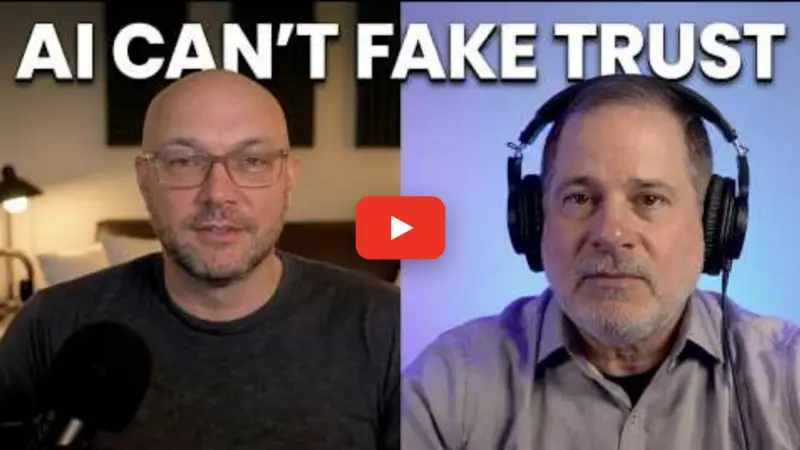
Stop Waiting to Be Picked. Start Doing Something Worth Picking.
Human-First AI Marketing, AI Marketing for Lawyers, AI Marketing for Professional Services, AI Content Marketing, AI Marketing Strategy, AI Personalization, DISC Personality…
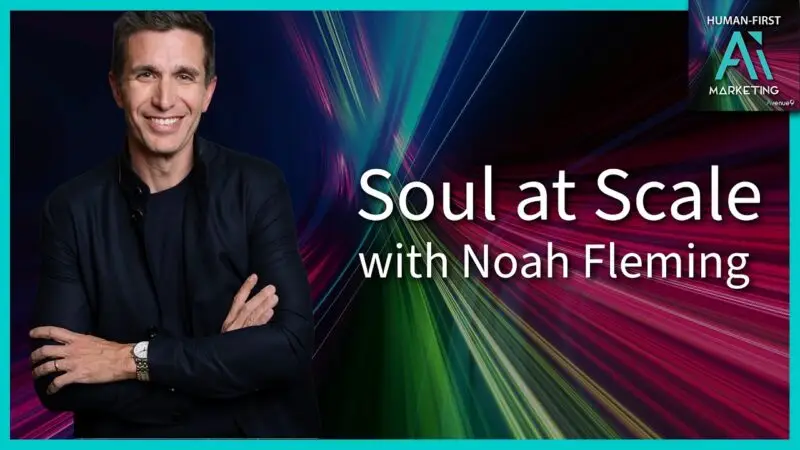
Soul at Scale with Noah Fleming
How can businesses scale with AI while preserving meaningful customer relationships? Mike Montague talks with Soul at Scale author Noah Fleming about…